Venue
Switzerland
07 September, 2021

Scope and Motivation
Since 2010, the year of initiation of annual Imagenet Competition where research teams submit programs that classify and detect objects, machine learning has gained significant popularity. In the present age, Machine learning, in particular deep learning, is incredibly powerful to make predictions based on large amounts of available data. There are many applications of machine learning in Computer vision, pattern recognition including Document analysis, Medical image analysis etc. In order to facilitate innovative collaboration and engagement between document analysis community and other research communities like computer vision and images analysis etc. here we plan to organize a workshop of Machine learning before the ICDAR conference.
The topics of interest of this workshop include, but are not limited to:
- Analysis and recognition of document images and handwritings using machine learning, such as Deep learning,
- Convolutional Neural Network (CNN),
- Recurrent Neural Network,
- Semantic Analysis (e.g., Word Embedding and Topic Models),
- Graphical Models and Their Optimization (e.g., HMM and CRF/MRF),
- Feature Reduction and Selection (e.g., Sparse Representation and Latent Space Analysis),
- Metric Learning, Ensemble Learning (e.g., Boosting and Random Forests),
- Support Vector Machine (SVM),
- Instance-Based Methods (e.g., k-Nearest Neighbour classifier),
etc.
Relevance for ICDAR:
Since Machine Learning has been used largely in document analysis area hence this workshop has very much relevance with ICDAR.
Important Dates
Paper Submission : May 26, 2021
Acceptance Notification: June 26, 2021
Camera Ready Version: July 05, 2021
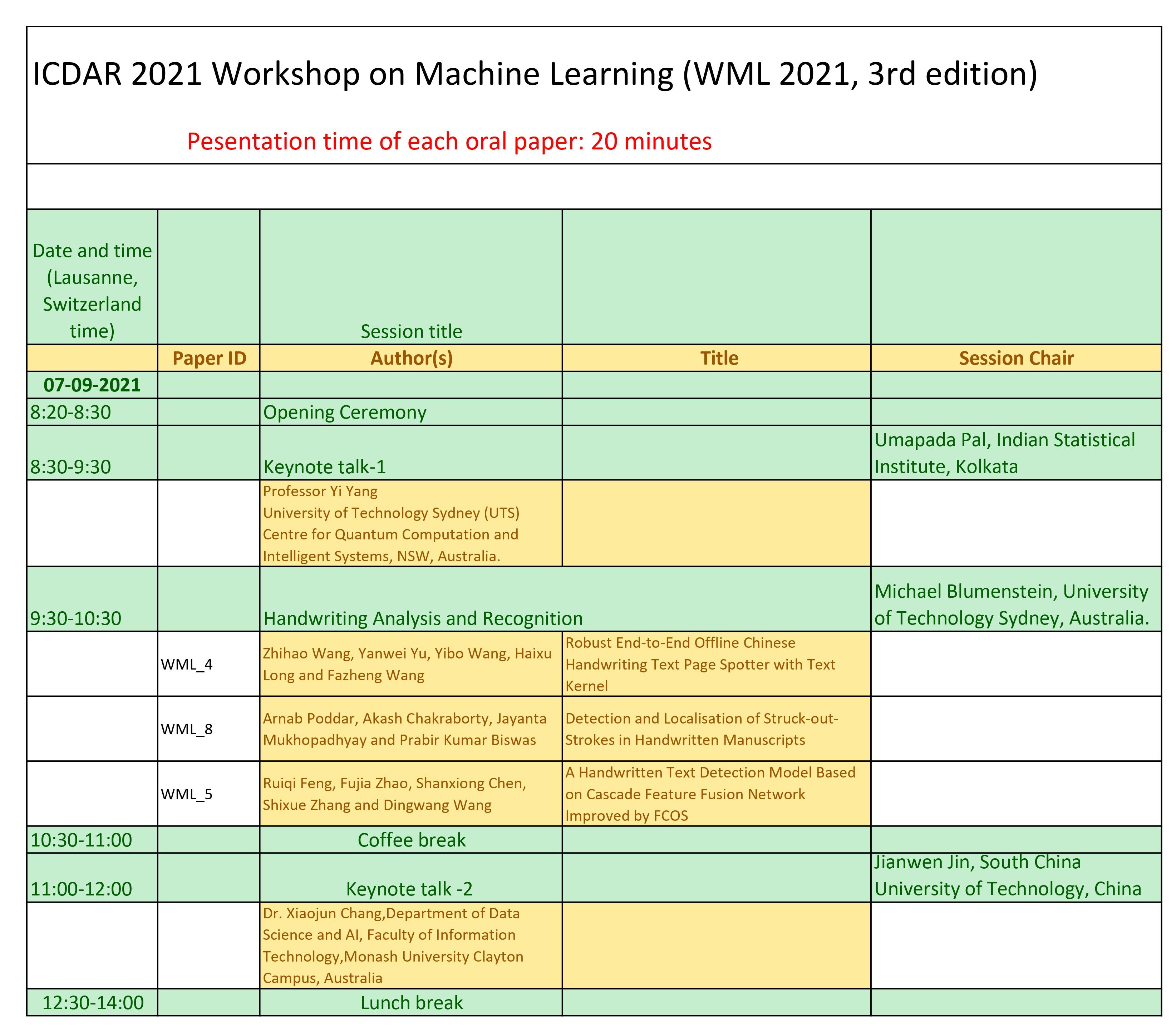
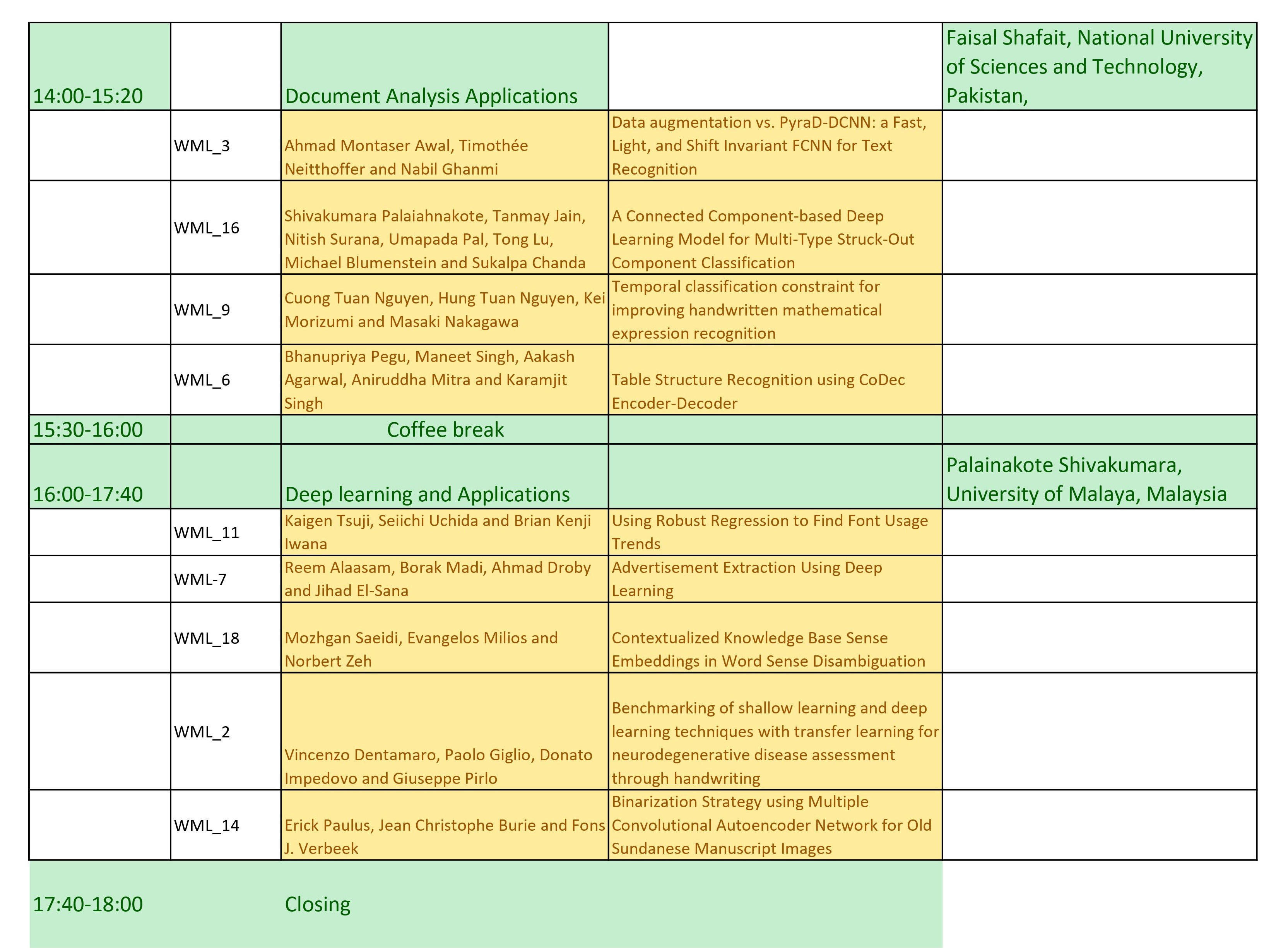
WML 2021 Workshop: September 07, 2021
Keynote Speaker
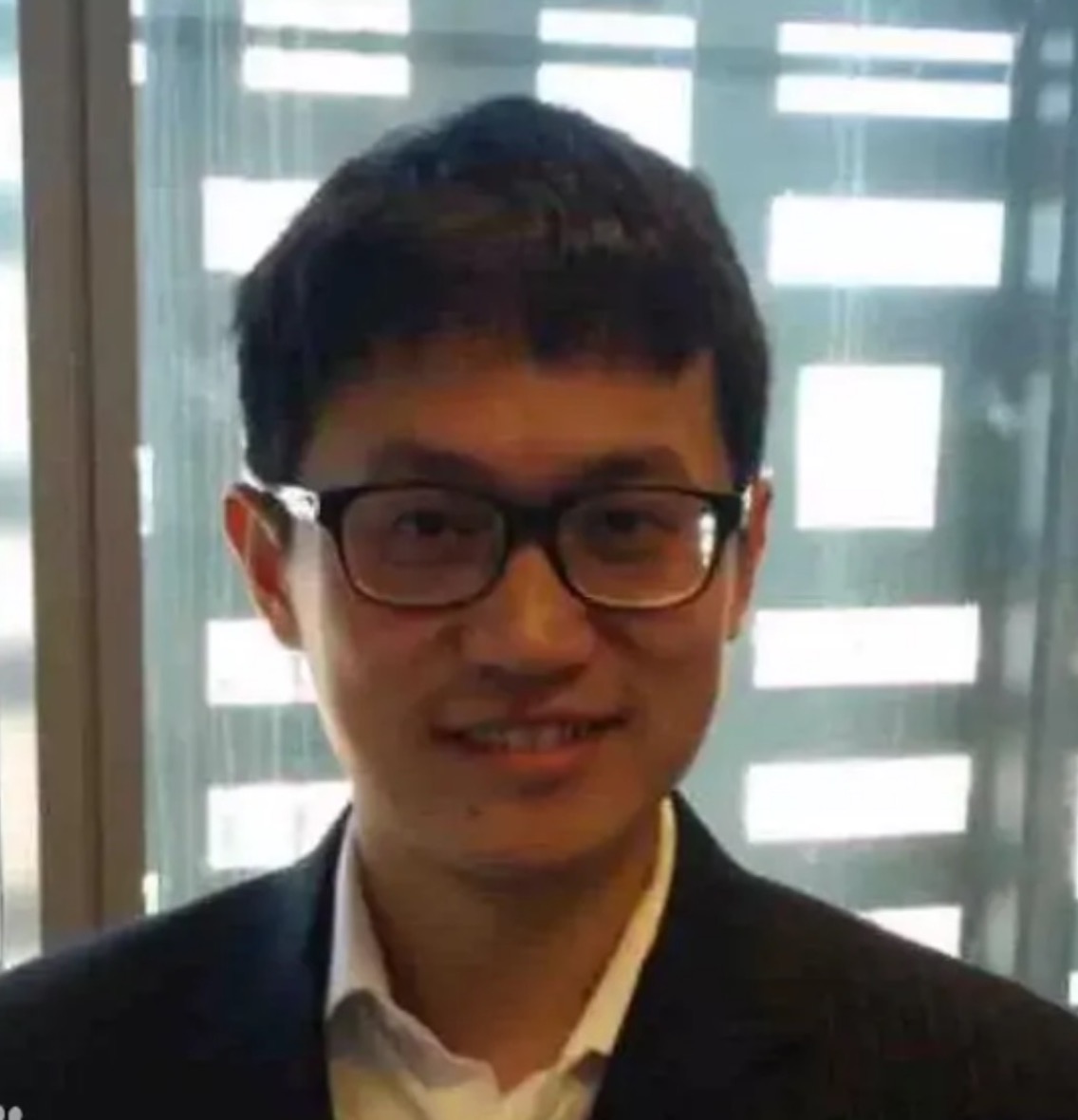
Professor Yi Yang
University of Technology Sydney (UTS)
Centre for Quantum Computation and Intelligent Systems, NSW, Australia
https://scholar.google.com/citations?user=RMSuNFwAAAAJ&hl=en21, 2021
https://dblp.org/pid/33/4854-1.html
Biography: Professor Yi Yang received Ph.D degree from Zhejiang University, China in Computer Science. His PhD advisors were Prof. Yunhe Pan and Prof. Yueting Zhuang. He worked for the University of Queensland as a postdoctoral research fellow. In May 2011, he joined in the School of Computer Science at Carnegie Mellon University, working with Dr. Alex Hauptmann as a postroctoral research fellow. His research interests include machine learning and its applications to multimedia content analysis and computer vision, e.g. multimedia indexing and retrieval, multimedia event detection, multimedia database, etc. He has published more than 130 journal paper and over 110 conference papers. In recent years, he publishes more that 10 papers in IEEE transactions and more than 20 papers in important conferences like CVPR/ICCV/AAAI/Nips etc in every year and this can be seen from his DBLP
https://dblp.org/pid/33/4854-1.html
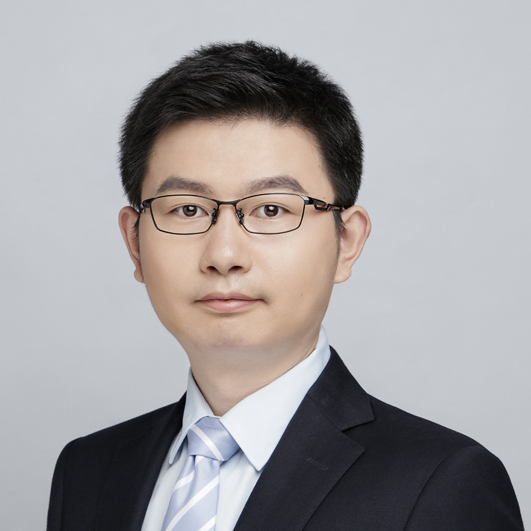
Dr. Xiaojun Chang
Senior Lecturer at Vision & Lanugage Group,
Department of Data Science and AI, Faculty of Information Technology,
Monash University Clayton Campus, Australia
https://scholar.google.com/citations?user=8suupocAAAAJ&hl=en
https://dblp.org/pid/116/8412.html
Biography: Dr Xiaojun Chang received his Ph.D. degree in Centre for Artificial Intelligence & Faculty of Engineering and Information Technology, University of Technology Sydney and currently Senior Lecturer at Vision & Language Group, Department of Data Science and AI, Faculty of Information Technology, Monash University Clayton Campus, Australia. Dr Chang is an ARC Discovery Early Career Researcher Award (DECRA) Fellow between 2019-2021 (awarded in 2018). Before joining Monash, he was a Postdoc Research Associate in School of Computer Science at Carnegie Mellon University. He has focused his research on exploring multiple signals (visual, acoustic, textual) for automatic content analysis in unconstrained or surveillance videos. His team has won multiple prizes from international grand challenges which hosted competitive teams from MIT, University of Maryland, Facebook AI Research (FAIR) and Baidu VIS, and aim to advance visual understanding using deep learning. For example, he won the first place in the TrecVID 2019 - Activity Extended Video (ActEV) challenge, which was held by National Institute of Standards and Technology, USA. Dr Chang also has been working on developing deep learning models to automatically annotate the disease labels from multi-source patient data (eg data from medical record) in Intensive Care Units (ICUs). The successful outcome of this project has greatly benefited health care and management in ICU of Royal Brisbane and Women's Hospital, considering that the automated diagnosis code annotation can significantly improve the quality and management of health care for both patients and caregivers. The outcome has been published in IEEE Transactions on Knowledge and Data Engineering in December 2016. Recently, he has successfully developed an automatic report generation system for critically ill COVID-19 patients using deep learning techniques with US public COVID-19 CT scan dataset. He collaborated with researchers from Australian Alliance for Artificial Intelligence in Healthcare on this project. The system achieves state-of-the-art performance on report generation and can generate reports very close to doctor handwritten report. His research focus in this period was mainly on developing machine learning algorithms and apply them to multimedia analysis and computer vision.
Organizing Committee
Workshop Chairs:
- Umapada Pal, Indian Statistical Institute, India
- Yi Yang, University of Technology Sydney. Australia
- Xiao-jun Wu, Jiangnan University, China
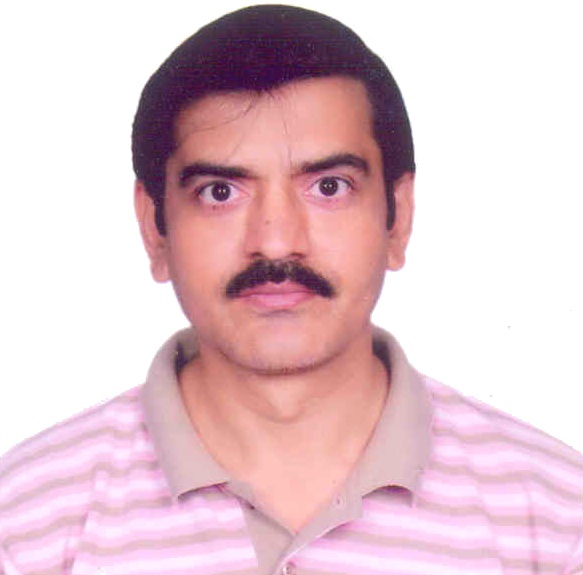
Program Chairs:
- Faisal Shafait, National University of Sciences and Technology, Pakistan
- Jianwen Jin, South China University of Technology, China
- Miguel A. Ferrer, University of Las Palmas de Gran Canaria, IDeTIC, Spain
Program Committee:
To be announced later.
Paper Submission :
Papers should be submitted via easychair.
Here is the link
https://easychair.org/conferences/?conf=icdarwml2021
The topics of interest of this workshop include, but are not limited to:
- Analysis and recognition of document images and handwritings using machine learning techniques, such as deep learning,
- Convolution Neural Networks (CNNs),
- Recurrent Neural Networks (RNNs),
- Semantic Analysis (e.g., Word Embedding and Topic Models),
- Graphical Models and their Optimization (e.g., HMM and CRF/MRF),
- Feature Reduction and Selection (e.g., Sparse Representation and Latent Space Analysis),
- Metric Learning, Ensemble Learning (e.g., Boosting and Random Forests),
- Support Vector Machine (SVM),
- Instance-Based Methods (e.g., k-Nearest Neighbour classifier),
- Applications of Machine Learning, etc
We request you to submit your research work in this workshop.
Paper Length and publication of Proceedings :
The submitted papers in ICDAR-WML 2021 will have the same policy and
conditions of ICDAR 2021 main conference papers and the ICDAR-WML 2021
proceedings will be published under the Springer Lecture Notes in Computer
Science (LNCS) series. Length of the submitted papers will be up to 15 pages
in the proceedings, including references. Papers should be formatted (latex
or in Word) according to the instructions and style files provided by Springer
available in https://www.springer.com/gp/computer-science/lncs/conference-proceedings-guidelines
Important Dates:
Paper Submission: May 26, 2021
Acceptance Notification: June 26, 2021
Camera Ready Version: July 05, 2021
For more detail about the workshop please visit:
https://www.isical.ac.in/~cvpr/ICDARWML21 For further information please contact icdarwml@gmail.com
or https://icdar2021.org/program-2/workshops/
or umapada@isical.ac.in