
 Home
LEARNING DIFFEOMORPHISM FOR IMAGE REGISTRATION
by
Prof. Nilanjan Ray
Department of Computing Science
University of Alberta, Canada
Date: Tuesday, May 06, 2025
Time: 15:00 Hrs.
Venue: ECSU Seminar Room
Electronics and Communication Sciences Unit
9th Floor, S. N. Bose Bhavan (Library Building)
Indian Statistical Institute
203 B T Road
Kolkata 700108
Abstract
Diffeomorphic image registration (DIR) is a fundamental task in 3D medical image analysis that seeks topology-preserving deformations between image pairs. To ensure diffeomorphism, a common approach is to model the deformation field as the flow map solution of a differential equation, which is solved using efficient schemes such as scaling and squaring along with multiple smoothness regularization terms. In this paper, we propose a novel learning-based approach for diffeomorphic 3D image registration that models diffeomorphisms in a continuous-time framework using only a single regularization term, without requiring additional integration. We exploit the semigroup property - a fundamental characteristic of flow maps - as the sole form of regularization, ensuring temporally continuous diffeomorphic flows between image pairs. Leveraging this property, we prove that our formulation directly learns the flow map solution of an ODE, ensuring continuous inverse and cycle consistencies without explicit enforcement, while eliminating additional integration schemes and regularization terms. To achieve time-continuous diffeomorphisms, we employ time-embedded UNets, an architecture commonly used in diffusion models. Our results demonstrate that modeling diffeomorphism continuously in time improves registration performance. Experimental results on four public datasets demonstrate the superiority of our model over state-of-the-art diffeomorphic methods. Additionally, comparison to several recent non-diffeomorphic deformable image registration methods shows that our method achieves competitive Dice scores while significantly improving topology preservation. (https://github.com/mattkia/).
Biography:
Nilanjan Ray received the M.Tech. degree in computer science from the Indian Statistical Institute, India, in 1997, and the Ph.D. degree in electrical engineering from the University of Virginia, USA, in 2003. He is currently a Professor at the department of Computing Science with the University of Alberta, Canada. His research interests include computer vision and medical image analysis. He published more than 125 peer-reviewed articles in these areas. He served for the AI-GI-CRV 2017 as the Co-Chair and BMVC 2022 as a PC Member. He served as an Associate Editor for the IEEE Transactions on Image Processing, from 2013 to 2017, and IET Image Processing, from 2016 to 2021.
All are cordially invited.
Pinakpani Pal
Head
Electronics and Communication Sciences Unit (ECSU)
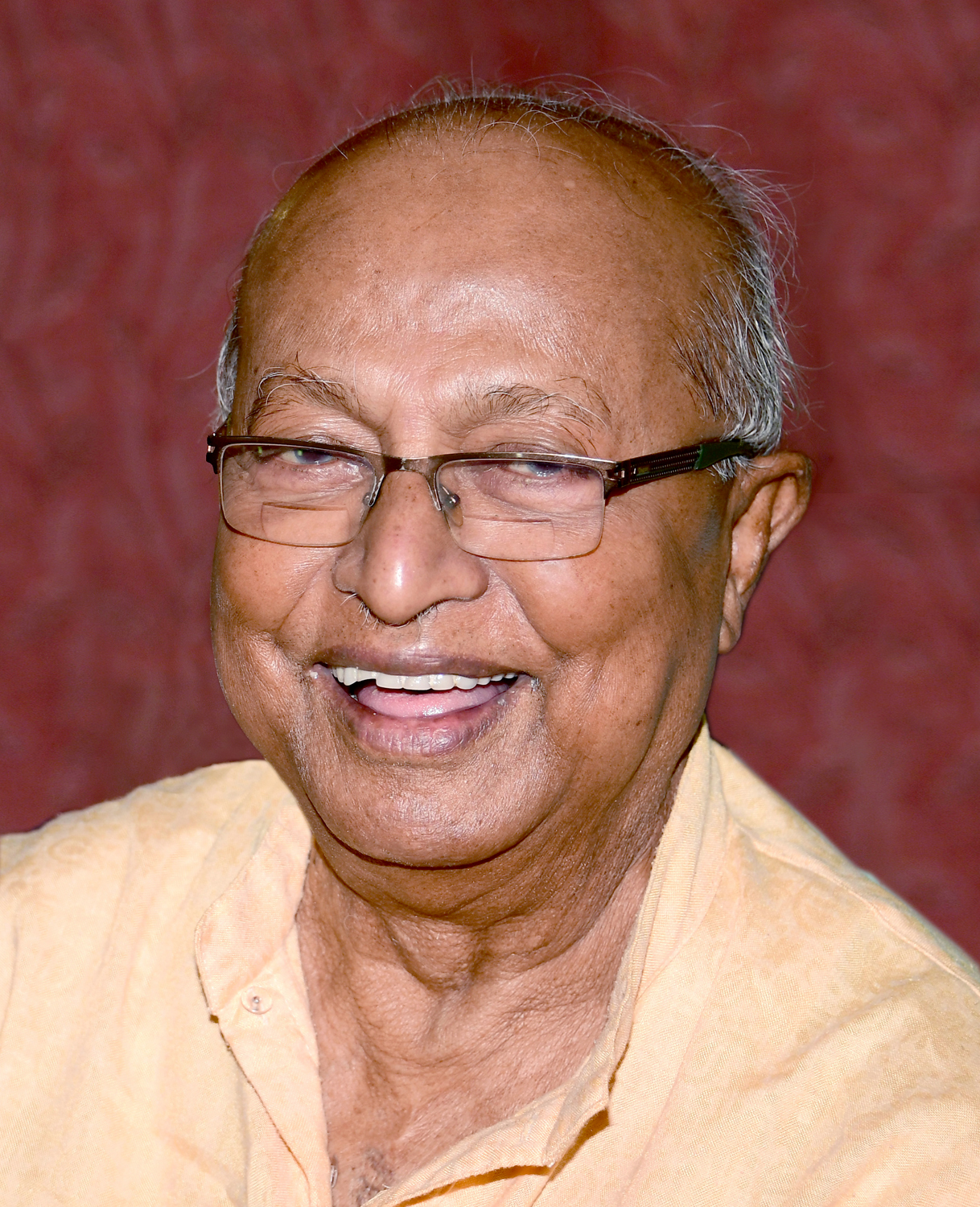
Prof. Dwijesh Dutta Majumder (10 Feb 1932 - 27 Jun 2020) Founder Head of ECSU