
Organised by
Technology Innovation Hub, Indian Statistical Institute (ISI)
203 B. T. Road, Kolkata
India-700108
Venue : Seminar Room, CVPR Unit,
8th Floor, S.N. Bose Bhavan (Library Building), ISI
203 B. T. Road, Kolkata
India-700108
Coordinator: Umapada Pal
CVPR Unit, Indian Statistical Institute
203 B. T. Road, Kolkata, India-700108
Aim of the Workshop
In the present age, Machine Learning, in particular deep learning, is used in most areas in Science, Engineering, Economics, Medicines, Business etc. There are many applications of Machine Learning in Computer Vision and Pattern Recognition also. Data science uses complex machine learning algorithms to build effective predictive models. The aim of this workshop is to give an overall idea about Machine learning and Data Science, and discuss in detail about some of the recent important applications of these areas. Talks will be delivered by some of the world renowned researchers in these domains.
Program Schedule of June 10, 2022
| Time | Speaker | Title |
|---|---|---|
| 10.45 - 11.45 | Michael Blumenstein, University of Technology Sydney (UTS), Sydney, Australia | Machine Learning myths debunked – how AI is transforming industry for the global good |
| 11.45 - 12.00 (Tea/Coffee Break) | ||
| 12.00 - 13.00 | Xiaoyi Jiang, University of Münster, Münster, Germany | Graph (Network) Analysis: A Pattern Recognition Perspective |
| 13.00 - 14.30 (Lunch) | ||
| 14.30 - 15.30 | Sudeep Sarkar, University of South Florida: Tampa, FL, USA | Measuring Economy from Space |
| 15.30 - 16.30 | Ashish Ghosh, Indian Statistical Institute, Kolkata, India | Introduction to Data Science |
| 16.30 - 16.45 (Tea/Coffee Break) | ||
| 16.45 - 17.45 | Sitanshu Sekhar Sahu, Birla Institute of Technology (BIT) Mesra, Ranchi, India | Machine Learning in Healthcare |
List of Speakers
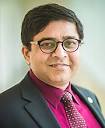
Sudeep Sarkar, Editor-in-Chief, Pattern Recognition Letters
University of South Florida: Tampa, FL, USA https://dblp.org/pid/72/3470.html
https://orcid.org/0000-0001-7332-4207
Biography: Sudeep Sarkar is professor and chair of computer science and engineering in the USF College of Engineering and associate vice president for special programs at USF. He has more than 25 years of experience conducting and directing fundamental and applied research in computer vision, image processing, and pattern recognition. He developed a new imaging device that can be used to collect data about the physical characteristics of human skin in terms of its color, texture, and elasticity, which is critical in diagnosing diseases such as melanoma. He is also a pioneering leader in the area of gait biometrics, a field that analyzes and catalogs the unique characteristics of the ways in which individuals walk. This development for identity detection has potential uses in security and threat assessment, as well as environmentally-aware electronic devices and smart rooms. Sarkar is also a leader in the development of recognition systems to translate videos of sign language into text to facilitate communication between hearing-impaired and hearing individuals. He holds six U.S. patents, has licensed technologies and has published high-impact journal and conference papers.
He received his M.S. and Ph.D. degrees in electrical engineering, on a University Presidential Fellowship, from The Ohio State University. He is the recipient of the National Science Foundation CAREER award in 1994, the USF Teaching Incentive Program Award in 1997, the Outstanding Undergraduate Teaching Award in 1998, and the Askounes-Ashford Distinguished Scholar Award in 2004.
He is a fellow of the American Association for the Advancement of Science (AAAS), National Academy of Inventors (NAI), American Institute of Medical and Biological Engineers (AIMBE), Institute of Electrical and Electronics Engineers (IEEE), and International Association for Pattern Recognition (IAPR).
https://cse.usf.edu/~sarkar/SudeepSarkar/About_Me.html
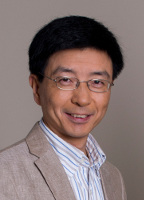
Xiaoyi Jiang, Editor-in-Chief, International Journal of Pattern Recognition and Artificial Intelligence
University of Münster, Münster, Germany
https://scholar.google.com/citations?user=_td9cSEAAAAJ&hl=en
https://dblp.org/pid/j/XiaoyiJiang.html
Biography:
Xiaoyi Jiang received the bachelor degree from Peking University, Beijing, China, and the PhD and Venia Docendi
(Habilitation) degrees from the University of Bern, Bern, Switzerland, all in Computer Science. He was an Associate
Professor with the Technical University of Berlin, Berlin, Germany. Since 2002, he has been a Full Professor of
Computer Science with the University of Münster, Münster, Germany, where he is currently the Dean of the Faculty of
Mathematics and Computer Science. His research interests include biomedical imaging, 3D image analysis, and structural
pattern recognition. Dr. Jiang is an Editor-in-Chief of the International Journal of Pattern Recognition and Artificial
Intelligence. He is and has been serving on the Advisory Board and the Editorial Board of several journals, including
IEEE Trans. on Systems, Man, and Cybernetics - Part B / IEEE Trans. on Cybernetics (2003--2014), IEEE Trans. on
Medical Imaging (2015--2019), International Journal of Neural Systems, Journal of Big Data, and Pattern Recognition
(2007--2019). He is a Senior Member of IEEE and a Fellow of IAPR.
https://www.uni-muenster.de/PRIA/en/personen/jiang.shtml
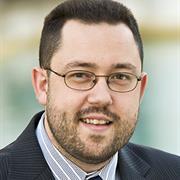
Michael Blumenstein
University of Technology Sydney (UTS), Sydney, Australia
https://scholar.google.co.in/citations?user=4m2G-H8AAAAJ&hl=en
https://dblp.org/pid/45/1824.html
Biography:
Professor Michael Blumenstein is currently the Deputy Dean (Research and Innovation) in the Faculty of Engineering & IT at UTS
where he previously held the positions of Associate Dean (Research Strategy and Management) and prior to that the Head of the
School of Software (now Computer Science). Previously, Professor Blumenstein worked at Griffith University in Queensland where
he accumulated over a decade of experience in leadership roles including portfolio Dean (Research) of the Sciences Group and
Head of the School of ICT.
Professor Blumenstein currently serves on the Board of the Internet of Things Alliance Australia (IoTAA). He previously served as Vice President (Academic) of the Australian Computer Society (ACS), and prior to that as Director of Technical Advisory Boards. Professor Blumenstein was also elected onto and served as a member on the NSW Council of the Australian Information Industry Association (AIIA). Prior to moving to NSW, he served as the Chair of the Queensland Branch of the Institute for Electrical and Electronic Engineers (IEEE) Computational Intelligence Society. He was also the Gold Coast Chapter Convener and a Board Member of the ACS Queensland Branch Executive Committee. He is a past Chairman of the IT Forum Gold Coast and a former Board Member of IT Queensland.
Michael has served on the Australian Research Council's (ARC) College of Experts on the Engineering, Mathematics and Informatics (EMI) panel. In addition, he also served on the Executive of the Australian Council of Deans of Information and Communication Technology (ACDICT).
https://profiles.uts.edu.au/Michael.Blumenstein
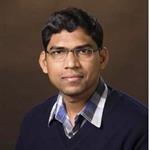
Sitanshu Sekhar Sahu
Birla Institute of Technology (BIT) Mesra, Ranchi, India
https://scholar.google.co.in/citations?user=F1VwnUIAAAAJ&hl=en
https://dblp.org/pid/21/8891.html
Biography:
Dr. Sitanshu Sekhar Sahu is presently working as an Associate Professor, in the Department of Electronics and Communication
Engineering at Birla Institute of Technology Mesra, Ranchi. He has received Ph.D Degree from NIT Rourkela, India. He has
completed Postdoctorate from Oklahoma State University, USA. He has been a recipient of DFAIT GSEF Fellowship from Canada Govt.
in 2008. He has published more than 75research papers in reputed referred international journals and conferences.
He has been active reviewer in many reputed Journals such as IEEE,IET, Elsevier Science, Springer, Taylor & Francis and
Biomed Central. He has completed several research projects from DST, MHRD, Govt of India and JCST, Jharkhand Govt. He has
chaired in many National and International Conferences. His research area includes Signal& Image Processing, Bioinformatics,
Machine Learning and Computer Vision. https://www.bitmesra.ac.in/Display_My_Profile_00983KKj893L?id=sXt%252bFIYwLC8GvCFLzW5Fk6lZ%252bzNUGE7Nwh7ngioF8vM%253d
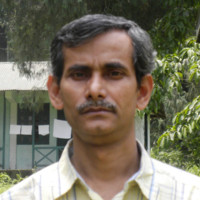
Ashish Ghosh
Indian Statistical Institute, Kolkata, India
https://scholar.google.co.in/citations?hl=en&user=JzwlRtAAAAAJ
https://dblp.org/pid/86/6753.html
Biography: Ashish Ghosh (Senior Member, IEEE) is a Professor with the Machine Intelligence Unit, Indian Statistical Institute. He has authored or coauthred around 250 research papers in internationally reputed journals and refereed conferences, and has edited eight books. His research interests include pattern recognition, machine learning, data mining, image and video analysis, soft computing, neural networks, evolutionary computation, and bioinformatics. He was the recipient of the the Young Scientists Award from the Indian Science Congress Association in 1992 and the Indian National Science Academy in 1995. He is acting as a Member of the Editorial boards of various international journals.
https://orcid.org/0000-0003-1548-5576
Contact
For any other information you may contact by email at parikshitofficial@gmail.com