
One day Tutorial on December 27, 2017
Speakers:
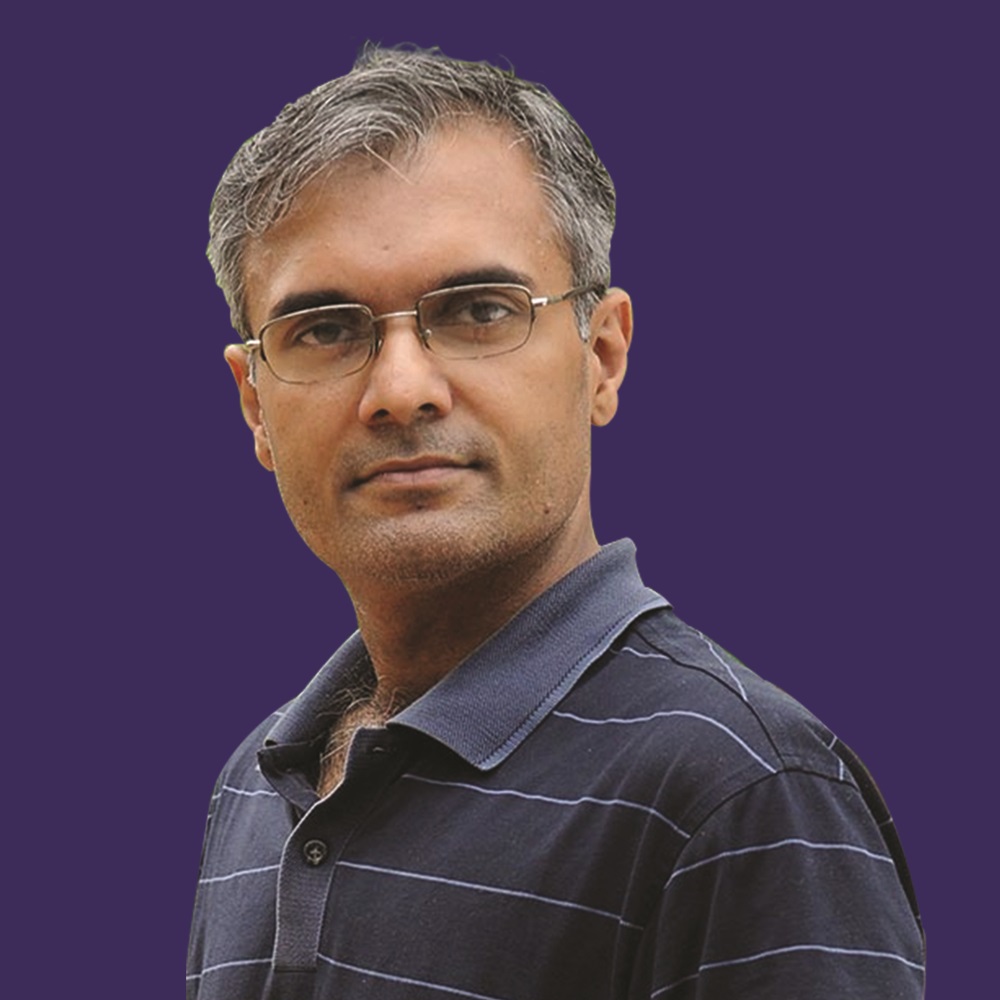
He studied at IIT Madras, IIM Bangalore and LBS, and worked at IBM, Infosys, Lehman Brothers and BCG. He and his team explore insights from data and communicate these as visual stories. These visual analyses and dashboards are built on the Gramener Visualisation Server.
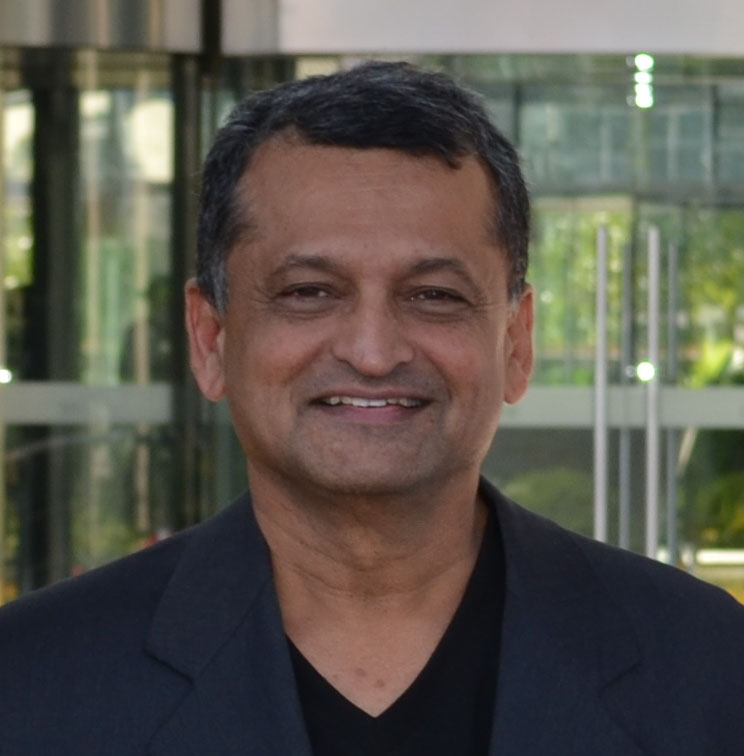
Sargur Srihari is currently a SUNY Distinguished Professor in the Department of Computer Science and Engineering at the University at Buffalo, The State University of New York where he also holds adjunct professorships in the Department of Biostatistics and in the Department of Electrical Engineering. He teaches courses in machine learning and probabilistic graphical models.
With support from the United States Postal Service for over 20 years, he founded CEDAR, the Center of Excellence for Document Analysis and Recognition, in 1991, which had a major impact. His research led to: (i) the first large-scale handwritten address interpretation systems in the world (deployed by the IRS and USPS), (ii) post-Daubert court acceptance of handwriting testimony based on handwriting individuality asessment, (iii) a software system in use by forensic document examiners worldwide (iv) statistical characterization of uncertainty in impression evidence, and (v) first characterization of document image analysis as a sub-field of pattern recognition.
Srihari has served on the National Academy of Sciences Committee on Identifying the Needs of the Forensic Science Community (2007-08), the National Library of Medicine Board of Scientific Counselors (2001-07), and two National Institute of Standards and Technology (NIST) working groups: Expert Working Group on Human Factors in Latent Print Analysis (2008-10), and Expert Working Group on Human Factors in Handwriting Examination (2015-17). He is presently a member of the Technical Advisory Group of the Houston Forensic Science Center. He has chaired committees of the International Association for Pattern Recognition. He is presently chairman of CedarTech, a corporation for university technology transfer.
Srihari's honors include: Outstanding Acheivements Award of IAPR/ICDAR in Beijing China in 2011, Distinguished alumnus of the Ohio State University College of Engineering in 1999. Fellow of the International Association for Pattern Recognition in 1996, Life Fellow of the Institute of Electrical and Electronics Engineers (IEEE) in 1995, and Fellow of the Institute of Electronics and Telecommunications Engineers (IETE, India) in 1992.
Srihari is an author of over 330 research papers and seven United States patents with over 15,000 citations. He has edited five books, and served as principal advisor to 37 doctoral students. He also played a leading role in establishing the International Conference on Document Analysis and Recognition, the International Conference on Frontiers in Handwriting Recogntion, and the International Workshop on Computational Forensics.
Srihari received a B.Sc. in Physics and Mathematics from the Bangalore University (National College) in 1967, a B.E. in Electrical Communication Engineering from the Indian Institute of Science, Bangalore in 1970, and a Ph.D. in Computer and Information Science from the Ohio State University, Columbus in 1976.
- Title: Non-iterative Methods for Time Series Forecasting
-
Date: December 27, 2017 Time: 9:00-10:30 Hrs;
Venue: Indian Statistical Institute, Bangalore
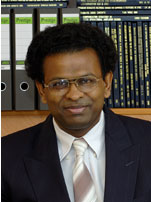
Short Biography: Ponnuthurai Nagaratnam Suganthan received the B.A degree, Postgraduate Certificate and M.A degree in Electrical and Information Engineering from the University of Cambridge, UK in 1990, 1992 and 1994, respectively. After completing his PhD research in 1995, he served as a pre-doctoral Research Assistant in the Dept of Electrical Engineering, University of Sydney in 1995-96 and a lecturer in the Dept of Computer Science and Electrical Engineering, University of Queensland in 1996-99. He moved to NTU in 1999. He is an Editorial Board Member of the Evolutionary Computation Journal, MIT Press. He is an associate editor of the IEEE Trans on Cybernetics (2012 - ), IEEE Trans on Evolutionary Computation (2005 -), Information Sciences (Elsevier) (2009 - ), Pattern Recognition (Elsevier) (2001 - ) and Int. J. of Swarm Intelligence Research (2009 - ) Journals. He is a founding co-editor-in-chief of Swarm and Evolutionary Computation (2010 - ), an SCI Indexed Elsevier Journal. His co-authored SaDE paper (published in April 2009) won the "IEEE Trans. on Evolutionary Computation outstanding paper award" in 2012. His former PhD student, Dr Jane Jing Liang, won the IEEE CIS Outstanding PhD dissertation award, in 2014. IEEE CIS Singapore Chapter won the best chapter award in Singapore in 2014 for its achievements in 2013 under his leadership. His research interests include swarm and evolutionary algorithms, pattern recognition, big data, deep learning and applications of swarm, evolutionary & machine learning algorithms. His publications have been well cited (Googlescholar Citations: ~26k). His SCI indexed publications attracted over 1000 SCI citations in each calendar years 2013, 2014, 2015, 2016 and 2017. He was selected as one of the highly cited researchers by Thomson Reuters in 2015, 2016 , and 2017 in computer science, also known as the World's Most Influential Scientists-2015. He served as the General Chair of the IEEE SSCI 2013. He has been a member of the IEEE (S'90, M'92, SM'00, F'15) since 1990 and an elected AdCom member of the IEEE Computational Intelligence Society (CIS) in 2014-2016.
- Title: Real world challenges in face recognition, ethical issues and lessons from Cognitive Science.
-
Date: December 27, 2017
Venue: Indian Statistical Institute, Bangalore
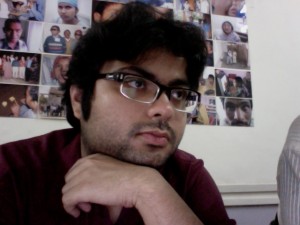
Short Biography: Short bio: Dr.Garga Chatterjee graduated in Medicine (MBBS) from Medical College, University of Calcutta (1999-2005). He received his PhD from Harvard University (2006-2011) in the Cognition, Brain and Behavior track at the Vision Sciences Lab headed by Prof.Ken Nakayama. Thereafter, he did his post-doctoral training at the Department of Brain and Cognitive Sciences, Massachusetts Institute of Technology at the lab of Prof.Pawan Sinha (2011-2014).