About Bishnupur
Baishnupur, about 132 kilometer away from Kolkata in the north-west direction, is a municipal town of Bankura district of West Bengal, India. This attractive tourist place is known for terracotta temples and famous handloom ‘Baluchari’ sarees (common cloths for Indian women). The place is one of the prospective candidates to be included in the list of UNESCO World Heritage sites. In the years of late 18th century, under the patronage of royal family, Bishnupur became the cultural hub of Bengal. During that period a particular style of Hidustani classical music called ‘Bishnupur gharana (school)’ and Bishnupur style of painting were developed.
The name of this region may be traced back in history during the reign of Samudragupta (c. 335-380 AD). At that time it was ruled by some Hindu king. However, the place flourished and attained its highest glory as the captital of Mallabhum kingdom. The kingdom spread over Bankura, Barddhaman, Medinipur, and parts of Murshidabad and Chhotanagpur of Bihar was ruled by the Malla kings. The capital of first Mall king Adi Malla aka Raghunath (c. 694-710 AD) was at Pradyumnapur. Malla king Jagat Malla aka Jagannath (c. 994-1007 AD) transferred his capital to Bishnupur, where it continued for almost one thousand years. He established the temple of Mrinmoyee Devi and king’s court in Bishnupur. Next important king was Hambir Malla Dev aka Veer Hambir (c. 1565-1620 CE) who defeated Pathan Sardar Dayud Khan in a battle. He was later converted to Vaishnavites by Thakur Srinibas Acharya, the pupil of Jeev Goswamin. His successor Malla kings built many Bishnu and Krishna temples in and around Bishnupur during 17th and 18th centuries.
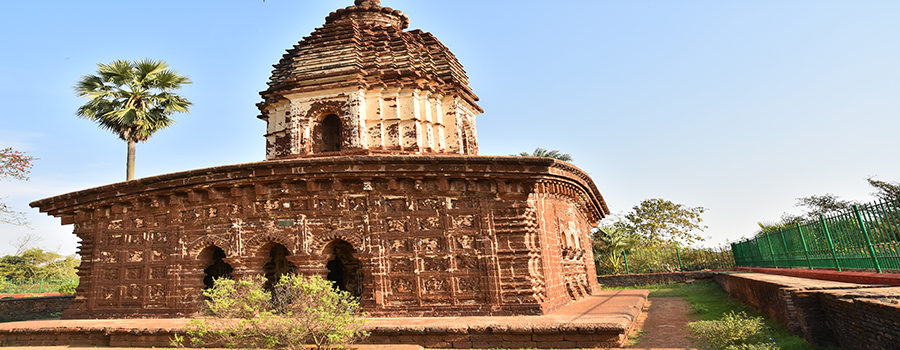
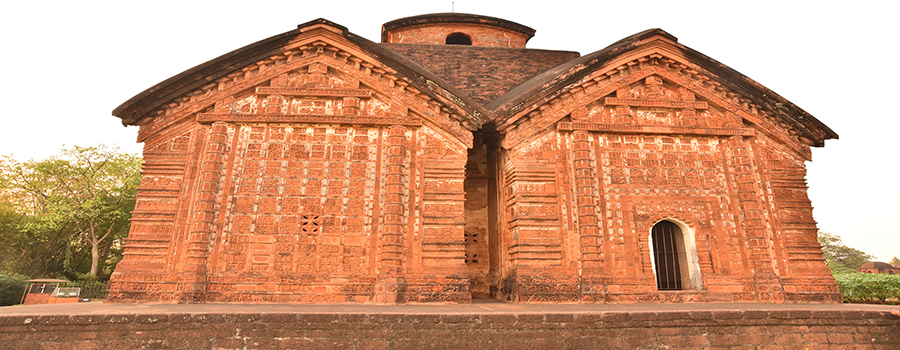
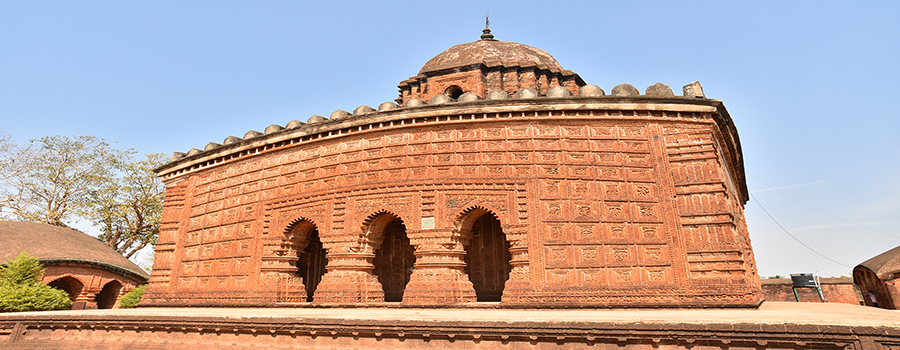
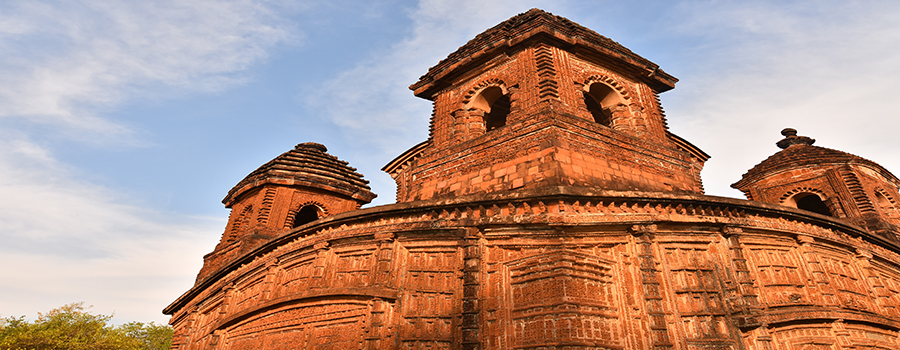
The terracotta temples of Bishnupur are the finest examples of classical temple architecture of Bengal. Bengal style of architectures may be classified into two groups: ‘Chala’ type and ‘Ratna’ type. Bishnupur temples belong to second category, which have towers or ‘Sikhara’ resembling spires with faceted sides on the top of the roof. Depending on the number of ‘Sikharas’ the temples are called ‘Eka-Ratna’, ‘Pancha-Ratna’ or ‘Nava-Ratna’. Temple walls are usually decorated with terracotta panels of floral and geometric patterns, and also with figures depicting contemporary life and, more commonly, mythological stories from ‘Puranas’.